

Fuel Injection
Signs of a Bad Diesel Injector: 7 Symptoms and What to Do Next
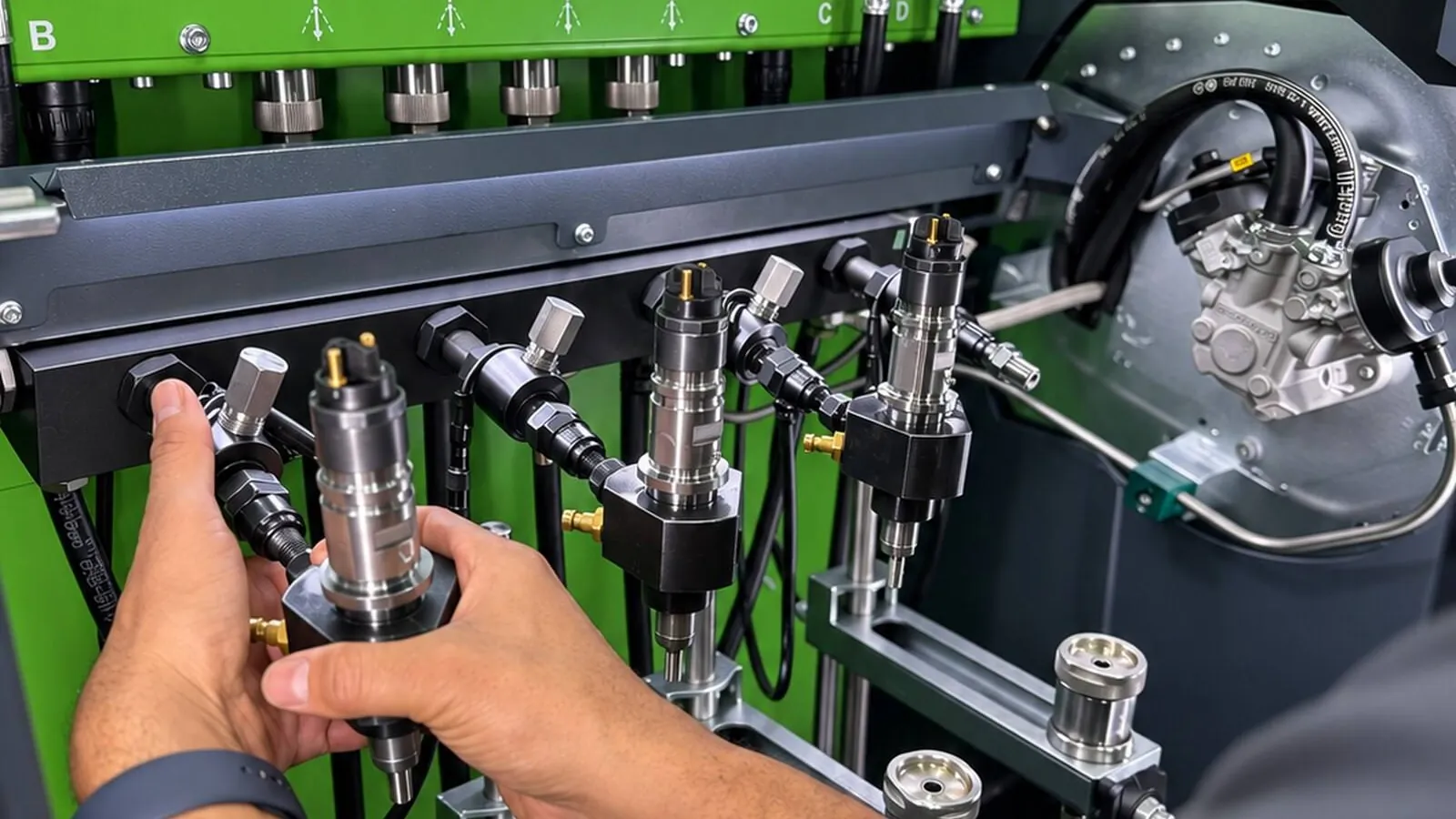
On this page
If your diesel engine has started to run differently, the injectors are one of the first places to look. They spray fuel into each cylinder in a precise pattern, at a precise moment, at very high pressure. When one stops doing that job well, the engine tells you. The trick is reading the signs correctly, because the same symptom can have more than one cause.
This guide walks through the seven signs we see most, what each one can mean, and what to do next. It applies to owner-operators with a single truck as well as fleets managing many.
What a diesel injector does
A diesel injector delivers a measured amount of fuel into the combustion chamber and breaks it into a fine spray so it burns cleanly. Modern common rail injectors are electronically controlled and can inject more than once per cycle. That precision is why a small fault, such as a worn nozzle, a weak coil or an internal leak, can change how the whole engine behaves.
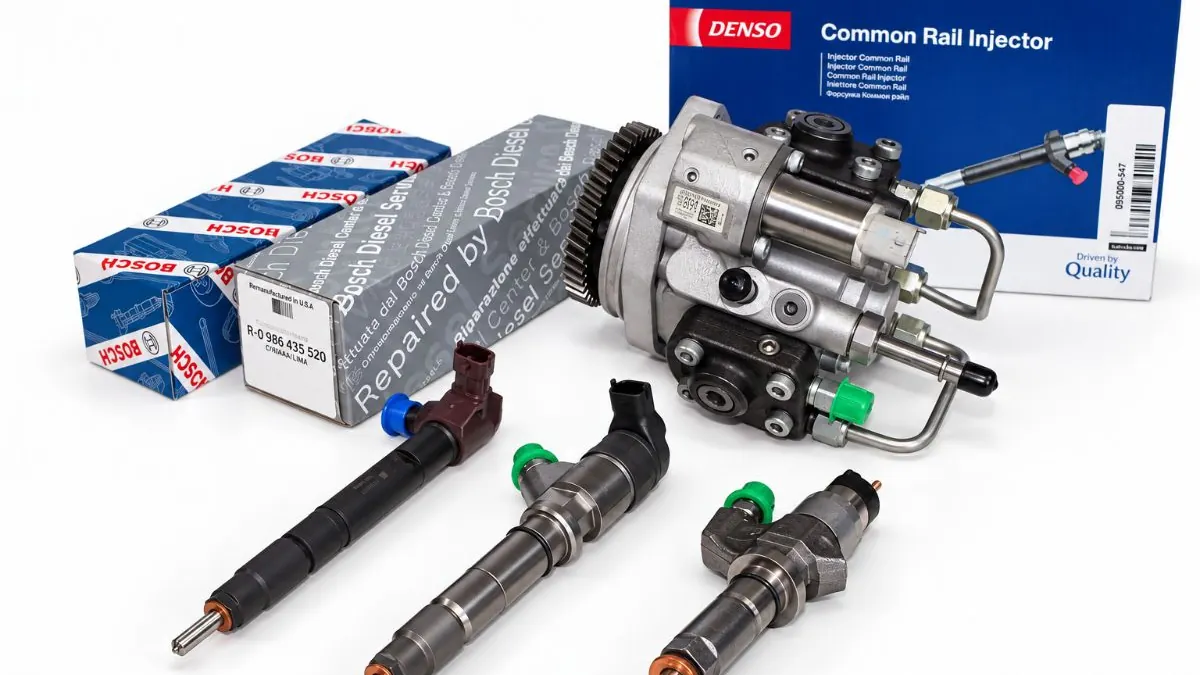
7 signs of a bad diesel injector
1. Hard starting or long cranking
If the engine cranks longer than it used to before it fires, or only starts after several tries, an injector that is leaking or not spraying properly can be part of the cause. Weak batteries, glow system problems and low fuel pressure can cause the same thing, which is why this sign alone is not a diagnosis.
2. Rough idle or misfire
A rough, shaky idle or a stumbling feel at low speed often points to a cylinder that is not getting the right amount of fuel. You may feel it as vibration through the cab or hear an uneven engine note. One failing injector can be enough to cause it.
3. Loss of power and sluggish acceleration
When the engine feels flat on hills, struggles to pull a load it used to handle, or takes longer to respond when you press the pedal, injectors that are under-delivering or spraying poorly are a common suspect. Turbo, air intake and fuel supply problems can look the same, so they need to be ruled out.
4. Excess exhaust smoke
Smoke is useful information. Black smoke usually points to too much fuel or incomplete combustion. White smoke can mean unburned fuel. Blue smoke is more often related to oil burning than to injectors. A badly atomizing or dribbling injector can contribute to black or white smoke, but smoke has several possible sources, so treat it as a reason to test, not a final answer.
5. Worse fuel economy
If you are filling up more often with no change in routes, loads or driving habits, injectors that deliver more fuel than needed, or burn it inefficiently, may be costing you money every mile. Track fuel economy over a few tanks. A steady decline is a signal worth acting on.
6. Fuel smell, leaks or a rising oil level
A strong raw fuel smell, visible fuel around the injector area, or engine oil that smells like fuel and appears to be rising on the dipstick can mean fuel is getting where it should not. This one deserves quick attention because diluted oil does not protect the engine the way it should.
7. Check engine light and fault codes
Electronic injectors are monitored by the engine control module. Codes related to injector circuits, cylinder balance or fuel rail pressure can point toward an injector problem. A code tells you where the computer saw a problem. It does not always tell you why, so codes should lead to testing, not to guessing.
Signs of a bad diesel injector at a glance
| What you notice | What it can mean | Can also be caused by | Next step |
|---|---|---|---|
| Hard starting | Leaking or poorly spraying injector | Weak batteries, glow system, low fuel pressure | Check basics, then test injectors |
| Rough idle or misfire | One cylinder under- or over-fueled | Air leaks, compression issues | Read codes, test injectors |
| Loss of power | Injectors under-delivering | Turbo, clogged filters, fuel supply | Rule out filters and turbo, test injectors |
| Black or white smoke | Poor atomization or too much fuel | Air restriction, turbo, coolant or oil issues | Diagnose before replacing parts |
| Worse fuel economy | Injectors over-fueling or spraying poorly | Tires, load, driving habits, air intake | Track mpg, then test |
| Fuel smell or oil level rising | Injector or seal leak | Other fuel system leaks | Stop and inspect soon |
| Fault codes | Injector circuit or balance problem | Wiring, sensors, fuel pressure | Use codes as the starting point |
Why one bad injector matters
An engine works as a balanced system. When one cylinder is not firing as it should, the others work around it, and the engine can run rougher and less efficiently. Driving for a long time with a clearly failing injector can add stress to the engine, and a leaking injector can dilute the oil. Catching it early usually keeps the repair smaller.
Why test before you replace
Here is the part that saves money. A failed symptom does not always mean a new injector, and a new set can be expensive. Testing tells you whether the injectors can be restored to manufacturer standards, which in many cases costs far less than replacing them.
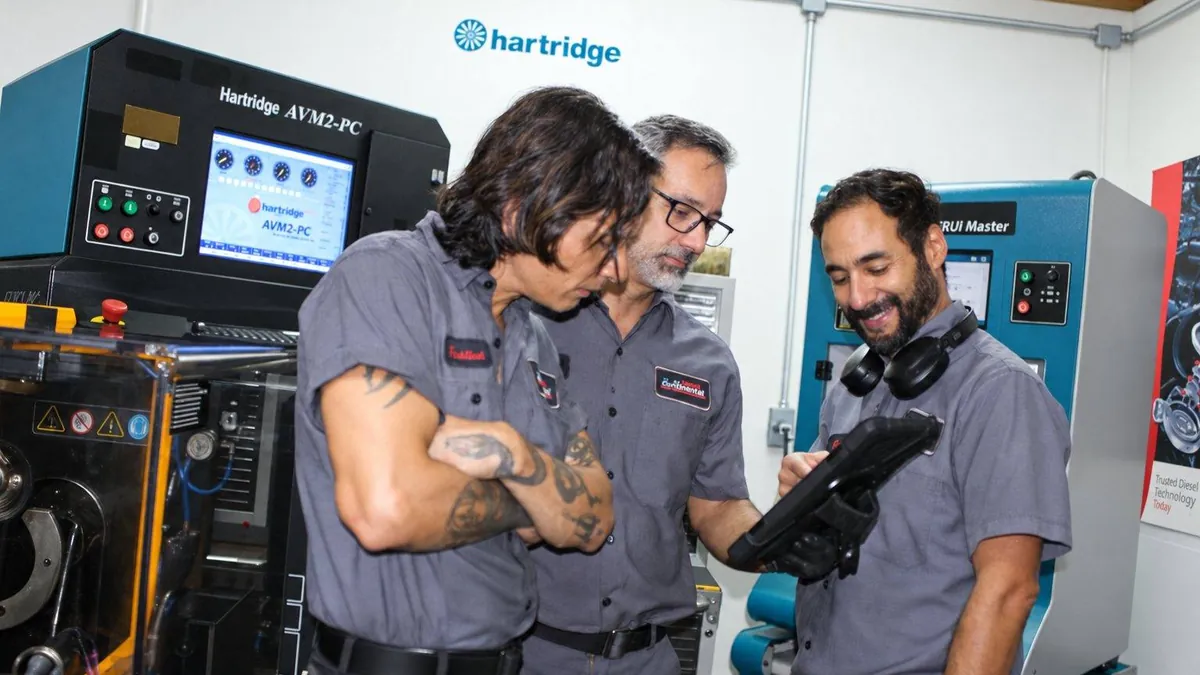
At Diesel Continental, every injector is tested on our bench before we recommend a repair. For electronic injectors, that includes ultra-sonic cleaning and flushing, an insulation test, coil resistance and inductance, nozzle opening pressure and spray pattern, and a dynamic test that measures flow, internal pressure and response time at cranking, low idle, max torque and max power. For common rail injectors we also check pre- and post-injection performance and fuel back-leak flow.
You get the results in plain language: what passed, what failed and why. Then you decide whether to restore, remanufacture or replace.
What to do next if you notice these signs
- Write down what you see. Note the symptom, when it happens (cold start, under load, at idle) and any dash codes.
- Check the simple things first. Fuel filters, water in the fuel, air filter and battery condition are quick to rule out.
- Do not ignore severe signs. Heavy smoke, a strong fuel smell, fuel in the oil or a hard misfire are reasons to stop driving and have the engine inspected.
- Get the injectors tested. A diagnostic tells you if the injectors are the problem and what it will take to fix them.
- Decide with the results in hand. Restore it, remanufacture it or replace it.
Diesel injector testing in Orlando
Diesel Continental is a Bosch Diesel Center in Orlando. We test injectors, pumps and turbos for owner-operators, repair shops and fleets, and we work on the engines you see every day, including Cummins, Detroit Diesel, Caterpillar, Volvo, International and Paccar, as well as diesel pickups such as Ram, Duramax and Power Stroke.
See exactly what we test on our Tests & Diagnostics page, learn what our certification means on the Bosch Diesel Center page, or explore remanufactured injectors and pumps if your injectors cannot be restored as they are.
Not sure what is wrong? Request a Diagnostic or call (321) 946-3822.
Frequently asked questions
What are the first signs of a bad diesel injector?
The first signs are usually hard starting, a rough idle or misfire, a loss of power and worse fuel economy. Excess smoke, a fuel smell and fault codes can follow. Because other parts of the fuel system can cause the same symptoms, testing is the reliable way to confirm it.
Can I keep driving with a bad diesel injector?
It depends on how severe it is. Mild symptoms may let you reach a shop, but heavy smoke, a strong fuel smell, fuel in the oil or a hard misfire are reasons to stop and have the engine inspected, because continued driving can add stress to the engine.
How do I know if it is the injector or something else?
You rule out the simple causes first, such as fuel filters, water in the fuel, air restrictions and battery condition, then test the injectors. Testing on a bench shows whether an injector is spraying and responding the way it should.
Can a bad diesel injector be repaired instead of replaced?
Often, yes. Many injectors can be restored or remanufactured after testing, which can cost less than buying new. The test results show what is possible for your specific injectors.
Does a diagnostic at Diesel Continental cost anything?
A flat-rate diagnostic fee applies. If you move forward with the repair at Diesel Continental, the diagnostic is included at no charge. Call (321) 946-3822 to confirm the current fee for your engine.